
Automated Cell Culture Bioprocessing Trends 2026
Advanced automated cell culture technology is redefining bioprocessing efficiency. 6 billion in 2026.
This rapid growth reflects a surge in demand for reproducibility. Researchers and manufacturers alike are embracing automation at scale.
By minimizing human intervention, these systems boost consistency and output. The transition is changing how cell-based therapies are developed.
With double-digit growth, 2026 marks a pivotal point for the industry. Understanding these trends is critical for labs planning their next investments.
What You Need To Know Before Getting Started With Automated Cell Culture
Automated cell culture is transforming bioprocessing. The market is projected to grow from $23.6 billion in 2026 to $56.1 billion by 2033. That growth signals serious momentum.
Before you invest, understand your workflow needs. Evaluate which processes require automation.
Focus on tasks that are repetitive or error-prone. Seeding, incubation, monitoring, and harvesting are prime candidates.
Consider these essentials:
- Define your scalability goals.
- Assess integration with existing systems.
- Plan for software and data management.
- Budget for instruments, consumables, and training.
Automation delivers consistency, but only with proper planning. Start small, validate thoroughly, then scale confidently.
The Most Important Aspects Of Automated Cell Culture Clearly Explained
Automated cell culture hinges on several critical components. Instruments handle seeding, incubation, monitoring, and harvesting.
Consumables ensure sterile, reproducible conditions. Software manages workflows and analyzes real-time data.
These elements work together to reduce human error and boost consistency. 1 billion by 2033.
Scalability is another key aspect, allowing labs to expand production without proportional labor costs.
Integration with existing bioprocessing systems also matters.
A true automated platform unifies these factors seamlessly.
That integration drives efficiency, reproducibility, and regulatory compliance.
Choosing the right balance of these aspects determines success.
A Step By Step Guide To Mastering Automated Cell Culture
Mastering automated cell culture requires careful planning and disciplined execution.
Start by auditing your current workflow, then follow these core steps.
- Map every manual step, including seeding, feeding, and harvesting, to identify bottlenecks.
- Select automated platforms validated for your specific cell lines and throughput needs.
- Run side-by-side comparisons between manual and automated methods for accuracy.
- Program alarm thresholds for critical parameters like pH, oxygen, and temperature.
- Document protocol deviations and refresh training whenever changes occur.
- Review trends and adjust schedules to optimize yield and consistency.
Each cycle brings more data, so refine your workflow continuously. This approach turns manual guesswork into predictable, reproducible bioprocessing.
Common Challenges And How To Overcome Them In Automated Cell Culture
Contamination remains the top concern in automated cell culture. Automated systems reduce human error but introduce complex tubing and pumps.
These components require rigorous validation and routine maintenance. Schedule regular decontamination cycles to keep risks low.
Another common hurdle is high capital investment. Start with modular equipment that scales incrementally.
Data integration also poses difficulties. Choose platforms with open APIs and robust software.
Follow a structured approach:
- Validate each automated step against manual controls.
- Monitor alarm thresholds for temperature, pH, and CO2.
- Train staff on system-specific workflows.
- Document deviations and corrective actions.
These steps prevent costly failures and ensure reproducible results.
Expert Tips For Getting Better Results From Automated Cell Culture
Automated cell culture rewards disciplined execution. To get better results, focus on the details that separate high-performing labs from the rest. Follow these recommendations for every run:
- Standardize protocols and document parameter changes for reproducible runs.
- Calibrate sensors regularly for pH, oxygen, and temperature to prevent drift.
- Use real-time monitoring with threshold alerts to catch anomalies early.
- Integrate automation software with existing lab systems to reduce manual handoffs.
- Validate new workflows against manual controls before scaling.
Above all, invest in operator training. Skilled technicians troubleshoot faster, keep processes stable, and protect your long-term bioprocessing investment.
Useful Tools And Resources That Help With Automated Cell Culture
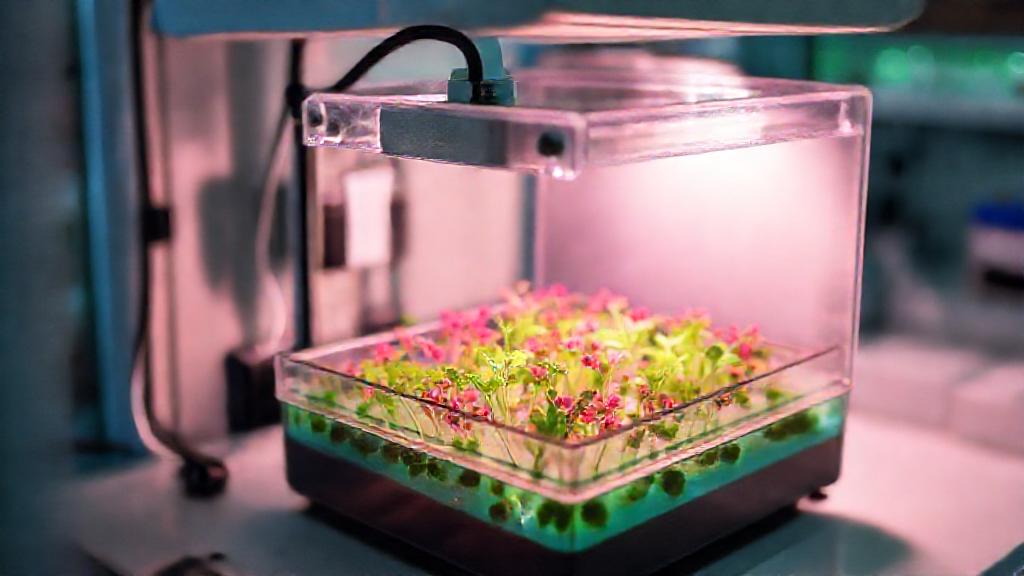
Several tools streamline automated cell culture workflows. Automated bioreactors handle seeding, incubation, and harvesting with minimal manual input.
Liquid handlers manage media changes and reagent additions precisely. Software platforms track cell growth and behavior in real time.
Consumables designed for automation reduce contamination risks and improve consistency. These tools enable remote monitoring and scale-up.
Useful resources include:
- Market reports from Grand View Research and Polaris for trend benchmarks.
- Technical guides from equipment vendors on system integration.
- Online communities and webinars sharing validated protocols.
These resources help labs adopt automation confidently and optimize results.
Common Mistakes To Avoid When Dealing With Automated Cell Culture
Automated systems remove repetitive labor, but they cannot fix poor technique. Even with advanced robotics, certain missteps can ruin experiments and waste resources.
Several common mistakes can undermine an otherwise sound automated workflow.
- Skipping regular calibration and proactive maintenance.
- Assuming automation eliminates contamination risk.
- Failing to validate new protocols against manual results.
- Overlooking staff training on error alerts and troubleshooting.
- Neglecting metadata and audit trail documentation.
Avoiding these errors keeps your bioprocessing workflow stable. Track each failure mode and adjust your standard operating procedures. Continuous oversight remains essential, even when the machine does the heavy lifting.
How To Measure Success And Improve Your Automated Cell Culture
Define success with key indicators. Use viability, doubling time, contamination rate.
Baseline data is essential. Compare each batch to historical runs. Automated culture reduces variability and improves throughput.
If results drift, inspect calibration, media, and pumps. Review metrics on a regular schedule. Focus on one improvement at a time.
Track viability and confluency in real time. Measure batch-to-batch consistency. Log contamination events. Adjust protocols using these insights. Tiny changes produce major gains. Continuous improvement turns data into outcomes.
What The Future Likely Holds Next For Automated Cell Culture
The future of automated cell culture points toward smarter, fully integrated systems. Artificial intelligence will refine process control and predictive analytics.
Closed automation will reduce contamination risks and manual oversight. Modular platforms will adapt to diverse applications, from drug discovery to regenerative medicine.
Key trends shaping 2026 include:
- AI-driven real-time monitoring and decision-making
- Single-use bioreactors with integrated sensors
- Cloud-based data management for decentralized labs
Market projections reinforce this momentum. The automated cell culture market is expected to grow from USD 23.6 billion in 2026 to USD 56.1 billion by 2033. Innovation will prioritize scalability, reproducibility, and regulatory compliance.
Automated cell culture is no longer an option; it is the standard for efficient bioprocessing. The 2026 trends reveal rapid growth in intelligent systems, real-time monitoring, and scalable platforms.
Embracing automation delivers better reproducibility, lower contamination risks, and faster development cycles. To stay competitive, evaluate your current workflows and adopt tools that align with your production goals.
Work with a partner like Palico Bio to implement robust, future-ready solutions. The bioprocessing leaders of tomorrow are acting today.