

2026 Laboratory Centrifuge Selection Rules for Cell Culture and Biopharma Research
Choosing a laboratory centrifuge in 2026 means balancing cell viability, throughput, and regulatory proof. Biopharma teams now harvest delicate mammalian cultures at scales from shake flasks to pilot bioreactors, and the wrong rotor geometry quietly costs recovery yield.
This guide walks through the selection rules that matter most for cell culture and biopharmaceutical research. You will learn how to map culture volume to instrument class, interpret RCF and sedimentation forces, match swinging bucket and fixed angle rotors to cell types, and satisfy biosafety, validation, and serviceability requirements without overspending.
Why 2026 Biopharma Workflows Demand Smarter Laboratory Centrifuge Selection Rules
Centrifuge choices that worked in 2020 research labs now strain against 2026 biopharma demands. Rising titers, larger batch volumes, and stricter documentation mean selection is a strategic decision, not a bench afterthought.
Modern workflows push three pressures onto every centrifugation step.
- Higher cell densities from intensified fed-batch processes demand validated run times, not copied protocols
- Gene and cell therapy pipelines require closed, aerosol-contained rotor systems
- GMP inspectors expect qualification records, calibration traceability, and preventive maintenance logs
A centrifuge mismatched to these realities wastes samples, stalls tech transfer, and complicates audits. Smarter rules connect rotor geometry, RCF, and documentation to the science they serve.
Mapping Cell Culture Scale From Shake Flasks to Bioreactor Harvest Volumes
Scale dictates both rotor choice and run strategy, so map volumes honestly before specifying hardware.
- Shake flasks and spinner cultures: 50 mL to 1 L, comfortably handled by benchtop swinging-bucket rotors.
- Bench bioreactors: 1–10 L, served by floor-standing units or repeated benchtop runs.
- Pilot and GMP campaigns: 50 L and above, where continuous-flow centrifugation frequently replaces batch processing.
Run time must also be validated against cell density, since concentrated suspensions need longer to pellet fully. Match every tier to documented capacity, not marketing maximums, and confirm the largest planned batch fits one validated run.
Understanding RCF, Rotor Geometry, and Sedimentation Forces in Cell Pelleting
Relative centrifugal force, not RPM, governs how quickly cells sediment through culture medium. Two centrifuges running identical RPM values can deliver markedly different pelleting forces.
Rotor geometry determines the distance cells travel before reaching the tube wall. Swinging bucket rotors lengthen that path, yielding gentler sedimentation and loose pellets.
Key variables to reconcile during protocol development:
- RCF measured at the tube’s maximum radius, not the minimum
- K-factor, which estimates relative pelleting efficiency between rotors
- Pellet compaction, since excessive g-force compresses delicate mammalian cells
Validate RCF targets against your cell line, vessel volume, and viability endpoints before locking parameters.
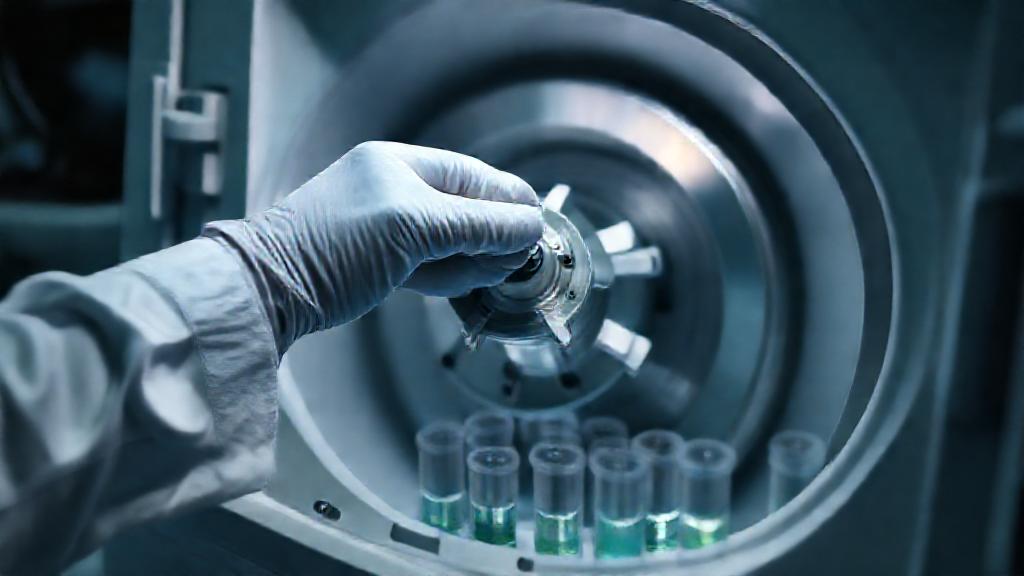
Matching Swinging Bucket and Fixed Angle Rotors to Mammalian Cell Types
Mammalian cells respond differently to sedimentation geometry. Rotor choice directly affects viability and recovery yield.
Match geometry to cell type and downstream processing step:
- Swinging bucket rotors swing tubes to horizontal, yielding soft, loosely packed pellets that resuspend gently — ideal for CHO, HEK293, and lymphocyte harvests.
- Fixed angle rotors hold tubes at 25–45°, pelleting faster at lower RCF but compacting cells against the tube wall.
For shear-sensitive mammalian cultures, swinging bucket geometry remains the safer default. Reserve fixed angle rotors for clarified lysates and debris removal, where tighter pellets and shorter runs outweigh gentle resuspension.
Refrigerated Benchtop Centrifuges for Temperature Sensitive Cell Culture Samples
Temperature drift during pelleting quietly erodes viability in mammalian cultures.
Refrigerated benchtop units hold the chamber near 4 °C. This protects heat-sensitive cells from rotor friction and ambient heat gain.
Evaluate these specifications when comparing 2026 models:
- Temperature stability of ±1 °C across the full run
- Pre-cooling capability before rotor loading
- Chamber insulation rated for high-speed runs above 15,000 x g
- Condensation management that prevents sample dilution
Gentle pelleting preserves membrane integrity for downstream assays. Pair refrigeration with swinging-bucket rotors for gently resuspended pellets in volumes up to 500 mL.
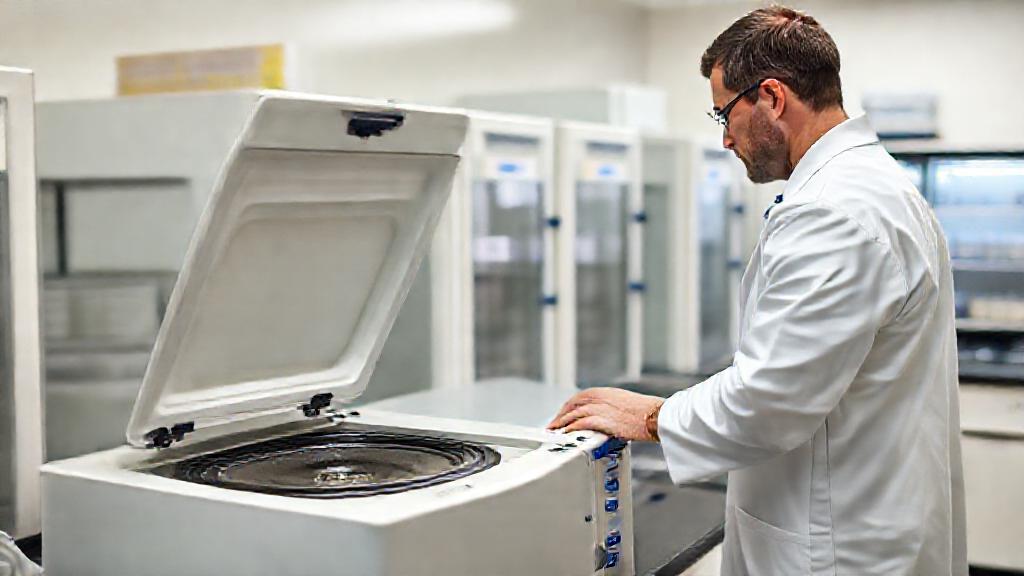
High Capacity Floor Standing Systems for Pilot and GMP Manufacturing Campaigns
Pilot and GMP campaigns move liters, not milliliters, so floor-standing systems with 4–12 liter rotor capacity become the practical baseline. Choose a unit whose maximum RCF still delivers validated pelleting performance at full load.
- Rotor capacity matched to single-pass harvest volume, reducing open-door handling time
- Continuous-flow or high-volume batch options for very large culture volumes
- Documented qualification packages, including IQ/OQ support and maintenance schedules
Validate minimum run time against expected cell densities, not just nominal values. Floor space, utilities, and service access should be confirmed before installation.
Energy use and service access also shape long-term operating cost.
Evaluating Sealed Rotors, Aerosol Containment, and Biosafety Compliance Features
Aerosol escape during high-speed runs threatens operators, samples, and cleanroom integrity.
- Sealed rotor lids and biocontainment covers block aerosol release at high speeds
- Aerosol-tight rotors certified against recognized biosafety testing standards
- HEPA-filtered exhaust options that reduce airborne particulate in benchtop units
- Autoclave-compatible, chemically resistant components supporting traceable decontamination
Where primary human cells or viral vectors are handled, containment is non-negotiable. Review manufacturer aerosol test certificates before purchase.
Match containment features to your biosafety level and sample risk category. Record rotor sealing integrity checks within equipment qualification documentation.
Qualification, Validation, and Preventive Maintenance Documentation for Regulated Environments
In regulated biopharma environments, every centrifuge needs a documented qualification trail. Documentation proves the instrument performs as intended.
Qualification typically proceeds through three documented stages.
- Installation qualification confirms correct siting, power supply, and rotor compatibility.
- Operational qualification verifies speed, temperature, and RCF accuracy against manufacturer specifications.
- Performance qualification demonstrates reproducible recovery across the expected range of sample densities.
Preventive maintenance records, calibration certificates, and rotor life logs should remain audit-ready. Auditors expect traceable records linking each run to a qualified, maintained instrument. Schedule service annually, and after any rotor stress incident, to protect sample integrity and compliance standing.
Budgeting for Throughput, Energy Use, and Long Term Serviceability in 2026
Total cost of ownership in 2026 extends far beyond the purchase invoice. Throughput per run, energy draw, and documented serviceability determine which platform survives a five-year validation cycle.
Energy consumption also drives facility load calculations and heat rejection in temperature-controlled suites. Evaluate each candidate against three practical criteria:
- Throughput: match rotor capacity to weekly harvest volume, not peak demand.
- Energy: refrigerated benchtop units draw less than floor-standing systems under light duty.
- Serviceability: confirm rotor life logs, spare-part lead times, and PM contracts before purchase.
Buyers who model these variables avoid premature replacements and unplanned downtime.
Selecting a laboratory centrifuge in 2026 means balancing RCF, rotor geometry, temperature control, and biosafety containment against your actual culture volumes. Small mammalian workflows favor refrigerated benchtop units with swinging-bucket rotors, while pilot and GMP campaigns demand qualified floor-standing systems with documented service histories.
Get the specification right early, and every downstream harvest, yield, and audit becomes easier to defend. Explore PalicoBio’s centrifuge portfolio to match the right configuration to your cell culture and biopharma research requirements today.